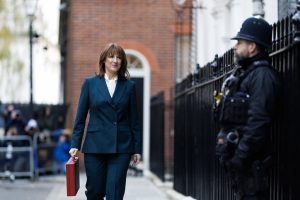

The Chancellor of the Exchequer, the Rt Hon Rachel Reeves MP, delivered her 2026 Spring Statement on Tuesday afternoon. While not a formal Budget, it provided an update on the state of the economy and the progress made since the Budget in November 2025, and was followed by the publication of the Office for Budget Responsibility’s Economic and fiscal outlook.[1] It is worth noting, however, that the OBR’s forecast was made before the latest conflict developments in the Middle East and does not take into account any potential fallouts from this, such as impact on gas prices, which have risen steeply since the beginning of March.[2]
Changes from November Budget
In her statement to the House of Commons, the Chancellor emphasised the importance of stability in underpinning economic growth.[3]
According to the Chancellor, UK GDP is forecast to grow by:
- 1.1 per cent in 2026
- 1.6 per cent in 2027 and 2028
- 1.5 per cent in 2029 and 2030
The 2026 GDP forecast is lower than the 1.4 per cent initially projected in November. Fiscal headroom has risen since the November Budget, from £21.7 billion to £23.6 billion, providing a stronger buffer against potential economic shocks, including escalating unrest in the Middle East.
Shaping the future economy
The Chancellor will deliver her second Mais lecture in a fortnight, where she will outline three major choices in shaping the future economy:
- Developing international relationships, addressing trade barriers, and strengthening alliances with Europe
- Supporting innovation and driving AI implementation
- Reshaping the UK’s economic geography to focus on growth and stability, improving opportunities across the UK.
Overview of announcements
Lowering the cost of living was a central focus in the Chancellor’s Statement. She used the Statement to highlight the policies already set out in the November 2025 Budget, including reducing energy bills and freezing rail fares, and referred to upcoming discounts on business energy costs.
The Chancellor’s statement also emphasised the steps taken by Government to improve outcomes for young people, including expanded free childcare for working parents, the provision of free school breakfasts, and continued efforts to support young people into employment, such as the £820 million Youth Guarantee, which provides young people with a guaranteed job.
The Chancellor noted that the OBR report shows that Public Sector Net Borrowing is set to reduce by from 4.3 per cent in 2026 to 1.8 per cent in 2029-2030 – and in economic terms, borrowing has reduced by close to £18 billion compared to the autumn.[4] Additionally, the Chancellor celebrated that headroom against the stability rule had increased from £21.7 billion to £23.6 billion.
Despite these positive statistics, the Government is facing stark geopolitical volatility that has the potential to destabilise any recent fiscal progress. While it is impossible to predict how gas prices will be affected in the long-term, Cornwall Insight has forecast that household energy bills could rise by £160 a year under the new price cap from July, representing an increase of 10 per cent on April’s price cap. With gas setting the price of power, electricity bills will also rise.[5]
Conclusion
The unpredictability of energy pricing caused by geopolitics has strengthened the arguments of both clean energy supporters and those seeking to maintain UK oil and gas production – with both advocating for “homegrown energy” as the only way to ensure energy security. Offshore industry leaders met with the Chancellor this week to advocate for the reform of the Energy Profits Levy (EPL), with the Chief Executive of OEUK stating that the Government has committed to finding a solution to replace the EPL.[6] Nevertheless, the Prime Minister on Thursday clearly expressed his support for the continuation of building clean energy in the UK as the pathway to energy security.[7] This echoes the Energy Secretary’s definitive statement to the Commons that same day that the UK must “get off our dependence on fossil fuel markets, whose prices we do not control, and on to clean home-grown power that we do control.[8]
While the Spring Statement included no new policy, as was intended, the Chancellor’s speech reflects her Government’s emphasis upon stability as the basis for growth. Especially in light of rising gas prices due to the emerging conflict in the Middle East, the need for energy security in the form of clean power is potentially easier to argue now than in the increasingly net-zero sceptic previous months.
Brevia Energy is a dedicated division of Brevia Consulting, and has a longstanding reputation for its expertise and experience in the Energy Sector.
To organise a discussion with Brevia Energy on how we can help you and your organisation, please get in touch via the link here. You can also contact the Brevia Energy Team on 020 7091 1650 or email contact@brevia.co.uk
Bibliography
[1] Office for Budget Responsibility, Economic and fiscal outlook, March 2026, Link
[2] Financial Times, UK energy bills: businesses and households face new price shock, 4 March 2026, Link
[3] HM Treasury, Spring Forecast 2026 speech, 3 March 2026, Link
[4] HM Treasury, Spring Forecast 2026: The right economic plan for Britain, 3 March 2026, Link
[5] Cornwall Insight, July Price Cap Forecast Rises to £1,800 as Conflict in the Middle East Drives up Gas Prices, 4 March 2026, Link
[6] Offshore Energies UK, Industry meets with Chancellor to reform Energy Profits Levy in the national interest, 5 March 2026, Link
[7] Prime Minister’s Office, PM remarks on the situation in the Middle East: 5 March 2026, Link
[8] Politico, Starmer’s answer to Iran energy shock: Go green faster, 6 March 2026, Link
Ed Miliband MP, Energy Markets, Commons Chamber, 5 March 2026, Link