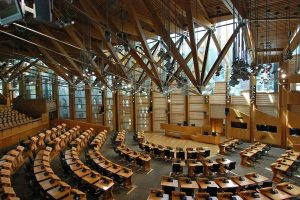

The Scottish Parliament is preparing to overhaul the rules governing one of its most important, yet often overlooked, linkages between policy-makers, organisations and the public: Cross-Party Groups (CPGs).
A new report from the Standards, Procedures and Public Appointments (SPPA) Committee has laid out a series of reforms designed to increase transparency and ensure that MSP participation in these groups is more than just a ‘paper exercise’.[1] As the Parliament moves towards the end of Session 6, these changes will set the tone for how stakeholders engage with Holyrood in the years to come.
CPG membership limits: A shift towards quality over quantity
The central pillar of the 6th Report, 2026 is the introduction of strict caps on MSP involvement. This mirrors a similar change seen in Westminster where new rules for All-Party Parliamentary Groups capped MP positions to prevent overtension. For years, concerns have been raised about ‘ghost memberships’ where MSPs join dozens of groups to show support for a cause but lack the capacity to attend meetings or provide oversight.
To combat this, the Committee has proposed:
- A 10-Group Limit: MSPs will be restricted to membership of a maximum of 10 CPGs at any one time.
- An Office-Bearer Cap: To ensure effective leadership, MSPs can only serve as an office-bearer (such as Convener or Vice-Convener) for a maximum of three groups.
These limits, backed by 72 per cent of MSPs in a recent consultation, aim to ensure that when a Member lends their name to a group, they are actually in the room when decisions are made.
New CPG transparency standards – the 30-day secretariat deadline:
For those providing secretariat services to CPGs, including many in the public affairs and charity sectors, the administrative burden is about to get heavier. The report introduces a mandatory 30-day deadline for the submission of meeting minutes to the Standards Clerks.
Furthermore, groups will now be required to notify the Parliament of any meeting cancellations on or before the scheduled date. These reforms are designed to provide a more accurate, real-time picture of which groups are active and which have fallen into dormancy.
2026 Scottish election and new re-registration timelines for CPGs
With the Scottish Parliament election looming on 7 May 2026, the Committee has also addressed the re-registration crunch. Currently, groups have 90 days after an election to re-form. The new rules extend this to 120 days, giving the new intake of MSPs more time to understand their parliamentary workload before committing to external interests.
Next steps and what this means for public affairs
For businesses, trade bodies, and charities, these reforms change the maths of engagement. With MSPs now restricted in how many groups they can join, competition for their time will increase.
Organisations can no longer rely on simply recruiting a long list of MSP names; instead, they must demonstrate clear policy value to ensure their group remains one of the ‘Top 10’ an MSP chooses to be involved in.
As the Scottish Parliament prepares to vote on these rules on 24 March 2026[2], stakeholders should begin auditing their current CPG memberships to ensure their voice remains part of the conversation in Holyrood.
BREVIA CONSULTING PROVIDES STRAIGHTFORWARD POLITICAL ADVICE AND SUPPORT TO BUSINESSES AND ORGANISATIONS
Discover how Brevia can help you and your organisation by contacting the Brevia Team on 020 7091 1650 or contact@brevia.co.uk
[1] Scottish Parliament Standards, Procedures and Public Appointments Committee, 6th Report, 2026 (Session 6) Code of Conduct changes – Cross-Party Groups, 20 February 2026, link