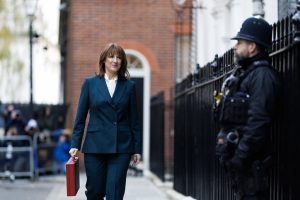

The UK Government has launched its first national Road Safety Strategy in more than a decade, setting out its plans to dramatically cut deaths and serious injuries on Britain’s roads. Launched on 6 January 2026, the Strategy aims to reduce road fatalities by 65 per cent by 2035, rising to 70 per cent for children under the age of 16.
The Strategy signals the most significant shift in UK driving laws and road safety policy in years, with multiple public consultations expected over the coming months.
Lower drink-driving limit and tougher enforcement
Central to the Strategy is a proposal to lower the drink-driving limit in England and Wales from 35mg to 22mg of alcohol per 100ml of breath, bringing the UK closer to European norms, and matching the current Scottish policy. The current limit, which is unchanged since 1967, is the highest in Europe, with government statistics showing that one in six road fatalities involves alcohol.[1]
Ministers estimate that 270 people died in drink-driving related incidents last year, although the majority of deaths involved additional factors beyond alcohol alone.[2]
Some have argued the alcohol limits need clarification beyond the existing plans. The current alcohol limit is often described in simple terms such as ‘one or two pints’ and critics argue this is misleading,[3] as alcohol concentration varies widely depending on individual characteristics including weight, metabolism and health.
Further consultations will examine:
- Mandatory alcohol interlock devices for repeat offenders
- Immediate licence suspension for those suspected of drink or drug-driving offences
- Stronger action against uninsured drivers, vehicles without a valid MOT, and so-called ‘ghost’ plates
The Government has confirmed it is not proposing a zero-alcohol limit, but Transport Minister Lilian Greenwood said the safest advice remains not to drink at all if driving.[4] She also noted that Scotland’s lower drink-drive limit did not seem to significantly damage the pub trade.[5]
Learner drivers, older drivers and new consultations
Beyond drink-driving, the Strategy proposes consultations on a range of potential reforms, including:[6]
- Introducing a minimum learning period for learner drivers
- Requiring eye tests for older drivers
- Tougher penalties and enforcement mechanisms across the system
Strategy, not statute
It is important to note is that this announcement is of the proposed strategy, rather than final legislation, meaning policies may evolve significantly during the white paper and committee stages. One of the guiding principles, officials say, is that ‘while human error is inevitable, deaths and serious injuries are not’.[7]
Delivery of the Strategy will be overseen by Lilian Greenwood, Minister for Local Transport, supported by an expert advisory panel.
The Strategy does not cover other possible reforms to reduce road deaths, such as road repair and increased public transport options.[8]
The Strategy marks a clear reset in road safety policy and sets the direction of travel for future UK driving law reform over the rest of this parliament.
BREVIA CONSULTING PROVIDES STRAIGHTFORWARD POLITICAL ADVICE AND SUPPORT TO BUSINESSES AND ORGANISATIONS
Discover how Brevia can help you and your organisation by contacting the Brevia Team on 020 7091 1650 or contact@brevia.co.uk
[1] Gov UK, Thousands of lives to be saved under bold new Road Safety Strategy, 6 January 2026, link
[2] ibid
[3] BBC, ‘Public do not know drink driving limit’, says ex-traffic officer, 13 August 2025, link
[4]Independent, Drivers warned not to drink at all as limit set to be slashed in England and Wales, 7 January 2026, link
[5] ibid
[6] Gov UK, Thousands of lives to be saved under bold new Road Safety Strategy, 6 January 2026, link
[7]ibid
[8] Transport Action Network, Healthy Travel Choices Can Improve Road Safety, 22 November 2023, link