
This article from Brevia examines the current state of UK micromobility policy, evaluates the UK’s performance against international peers and outlines the regulatory steps required to bridge the gap.
What is Micromobility?
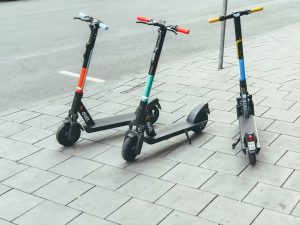
Micromobility is the use of lightweight vehicles (micro vehicles) such as e-scooters and e-bikes for short urban trips. It is seen as offering affordable and flexible transport options.
Why Micromobility matters?
Micro mobility is growing in importance across cities around the world and almost coincidentally offering answers to some major policy questions, such as those about congestion, personal mobility and the first and last mile in urban transport.
Micro vehicles are normally complementary to public transport, extending the reach of bus and train networks (though they are becoming an alternative suburb to city option in their own right). By providing a flexible and efficient option for the beginning and end of a journey, these vehicles expand the catchment areas of public transport hub stations and ease the last mile.
We are currently moving from the ‘Early Adopter’ phase into the ‘Early Majority’ on Rogers’ Innovation Adoption Curve. This shift is driven by increased technological familiarity, improved provider business models, and a growing public demand for alternatives to congested road networks.
The riddle of Integrated Urban Transport and how to ensure success?
The ‘holy grail’ of urban planning is a truly integrated network where buses, trams, trains, and micromobility operate as a single, interoperable system. Historically, this has been viewed as a ‘ministerial dead end’ due to its complexity. However, micromobility providers like Lime, Voi, and Brompton are starting to solve this riddle by providing the seamless connectivity that larger infrastructure often lacks.
To ensure this success continues, the UK must prioritise:
- Unified Payment Systems: A single transaction interface for all transport modes.
- Real-Time Data Integration: Digital platforms providing live updates on vehicle availability and schedules.
- Physical Connectivity: Purpose-built, safe transfer points and clear signage.
- Cybersecurity and Trust: Robust data regimes that protect user financial details while allowing for anonymised data sharing with authorities.
How do UK cities compare?
This can be difficult to quantify but a 2023 report commissioned by Clean Cities Campaign and compiled by Ricardo Energy & Environment1 evaluated cities on factors such as electric cars, bikes and e-scooters as well as the proportion of zero-emission buses. Out of 42 European cities, UK locations performed poorly:
- Berlin: Remains Europe’s leader with a fleet of nearly 59,000 shared vehicles.
- Paris: Despite specific scooter restrictions, its Vélib’ bike system recorded 49 million trips in 2024.
- The UK: Greater Manchester, Birmingham, and Edinburgh ranked among the lowest for shared transport adoption, while London sat in 24th place.
Similar findings were found in European Cycling Industries’ Shared Ambition 2024 report.2
The path forward: breaking the ‘trial mentality’
To catch up, the UK Government must move beyond the current cycle of temporary trials. E-scooter services in many regions are operating under extensions that last until 2028. This ‘trial mentality’ creates a ‘wait-and-see’ environment that stifles long-term investment in fleets and safety infrastructure.
Brevia has identified four pillars for regulatory reform:
1. Regulatory Responsiveness: Frameworks must evolve as quickly as the technology they govern.
2. Mode Neutrality: Avoiding arbitrary fleet caps that limit competition and innovation.
3. National Consistency: Ending the confusion caused by varying rules on speed limits, age restrictions, and pavement use across different cities.
4. Infrastructure Investment: Prioritising segregated lanes and road maintenance (pothole repair) to protect less experienced riders.
By ending the can-kicking approach to regulation, the UK can provide the certainty necessary for micromobility to move from a series of experiments to a cornerstone of our national transport strategy.
BREVIA CONSULTING PROVIDES STRAIGHTFORWARD PUBLIC AFFAIRS AND PUBLIC RELATIONS SUPPORT TO BUSINESSES AND CHARITIES.
Discover how Brevia can help you and your organisation by contacting the Brevia Team on 020 7091 1650 or contact@brevia.co.uk