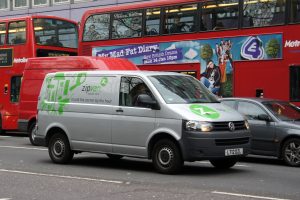

When Zipcar announced the end of its UK operations in December 2025, 650,000 members lost access to a service many had come to treat as a genuine alternative to car ownership.[1] The closure was framed as a business decision, but it was also a policy failure, and it is one that the sector cannot afford to ignore.
The extension of London’s Congestion Charge to electric vehicles can be seen as the final nail in Zipcar’s coffin. With over 1,000 EVs in their fleet on London’s roads, the company and its customers have faced a large and unbudgeted daily charge under the new £13.50 levy. But the Congestion Charge was only a piece of the wider regulatory obstacles that Zipcar faced.
Car-sharing in London was being negotiated on a borough-by-borough basis rather than through a single contract with Transport for London, meaning no one was taking an overall view or accountability for the financial sustainability of operators. Parking permit charges levied by individual councils had risen dramatically due to clean air surcharges,[2] with some London boroughs charging up to £2,300 for a single car club parking space permit.[3] Since Zipcar’s exit, boroughs such as Richmond, Southwark and Wandsworth have committed to slash car club charges.[4] Although positive, the fact only three have changed tack shows that London Boroughs on the whole do not value the car club model.
The ultimate issue was Zipcar faced a fragmented, convoluted and obstructionist environment. As Stephen Crisp, Brevia’s Head of Tech put it, the UK environment for car-sharing is ‘more interested in local economic windfalls than regulatory pragmatism. The sector is often neglected and is materially bereft of serious, accountable decision makers’.
Even during the peak years of Zipcar usage, London ranked 30th out of 42 European cities in the rollout of electric car clubs.[5] In order to create a thriving and economically viable car-sharing city, Brevia believe a number of regulatory, economic and decision making will have to change. This includes the need for parking policy to be coordinated at a city level, with dedicated, affordable bays protected for car clubs. Furthermore, the EV transition must be supported by an integrated charging policy accessible to all firms.
For operators looking to fill the void Zipcar has left, the opportunity is real, but the risks are well-documented. To succeed in this current environment requires sustained, proactive engagement with councils, the Mayor’s office, and national government to understand and work within the regulatory environment. This market requires more than just a good app and a clean fleet.
The Zipcar story doesn’t have to repeat itself. But avoiding it takes more than a better business model. It takes better politics.
BREVIA CONSULTING PROVIDES STRAIGHTFORWARD POLITICAL ADVICE AND SUPPORT TO BUSINESSES AND ORGANISATIONS
Discover how Brevia can help you and your organisation by contacting the Brevia Team on 020 7091 1650 or contact@brevia.co.uk
[1] BBC, Car-sharing company ZipCar to end UK operations, 1 December 2025, link
[2] The Guardian, Price of parking rises steeply due to English councils’ clean-air surcharges, 10 April 2025, link
[3] Clean Cities, Council car club parking charges in London may have contributed to Zipcar exit, 16 March 2026, link
[4] ibid
[5] Clean Cities, London ranked 30th out of 42 cities in race to help people ditch polluting cars, 3 July 2023, link