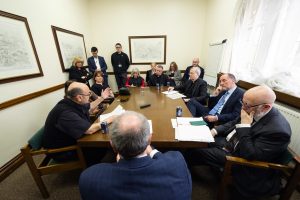

All-Party Parliamentary Groups (APPGs) are informal cross-party groups formed of MPs and Members of the House of Lords who share a common interest in a particular policy area, region or country. APPGs have no official status within Parliament but concerns over their transparency and susceptibility to undue influence have kept them under sustained scrutiny.
In August 2023, Brevia covered the new rules on APPGs agreed by the House on 19 July 2023. Those rules are now fully in force, alongside a wider conversation about lobbying transparency. Here is what has changed and what it means for anyone running or working with an APPG.
If you would like advice or require Brevia to provide secretariat support to an APPG, please visit our services page for more information or contact us.
Summary of the current APPG rules (Fully implemented)
The July 2023 reforms were introduced in phases following warnings from the Select Committee on Standards that, without reform, APPGs risked presenting ‘the next great parliamentary scandal’.[1] All of these measures are now fully active:
- Secretariat funding: A total ban on foreign government-funded secretariats took effect in October 2023.
- Core structure: Exactly four officers (at least two from the Commons), a 20-member minimum took effect on 31 March 2024, alongside enhanced AGM, quorum and annual reporting rules for APPGs receiving more than £1,500 in income or benefits in kind.
- Officer caps: The rule limiting MPs to officer roles in a maximum of six APPGs was tied to the start of next Parliament – meaning this cap is live for the current Parliament.
These reforms were covered in detail in Brevia’s 2023 APPG analysis. Any group that has not aligned its officer numbers, membership or APPG reporting is already non-compliant. When the rules took effect, at least 288 of the previous 722 APPGs were removed from the official register.[2]
The bigger picture: a wider transparency shake-up
In July 2026, the Government’s new Ethics and Integrity Commission, led by Doug Chalmers, published a report calling for a fundamental overhaul of lobbying transparency law.[3] The review, commissioned by then Prime Minister Keir Starmer, following the Peter Mandelson affair, recommends that all lobbying of ministers, senior officials and aides be publicly declared through a new register showing who is lobbying on which policies, and who they are meeting.
Any such change would require primary legislation and has not yet been implemented, but it points to the same underlying direction of travel as APPG reforms: more disclosure and less ambiguity about who is seeking access.
For organisations engaging with Parliament through APPGs, secretariats, or direct ministerial contact, transparency expectations are rising and the compliance bar looks to be moving upward even where the formal rules have not yet changed.
Speak to Brevia
If you would like advice or require Brevia to provide secretariat support to an APPG, please visit our services page for more information or contact our team on 020 7091 1650 or contact@brevia.co.uk
BREVIA CONSULTING PROVIDES STRAIGHTFORWARD POLITICAL ADVICE AND SUPPORT TO BUSINESSES AND CHARITIES
[1] BBC News, All-party groups: Foreign influence could be next scandal, MPs warn, 29 April 2022, link
[2] Tortoise, UK parliamentary groups disband following new transparency rules, 10 April 2024, link
[3] Ethics and Integrity Commission, Lobbying, Business Appointment Rules and Disclosure, 8 July 2026, link