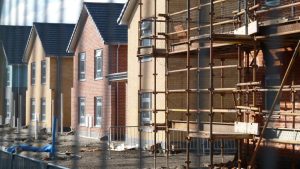

The UK’s post-2008 house building recovery remains uneven, despite successive Government’s legislative pushes to reinvigorate the sector. A full release of pent-up demand before 2029 is still considered unlikely, and the wider recovery depends largely on any further economic shocks, the scale of levies being applied to the industry, and on how quickly the remaining headwinds ease. In this article, Brevia takes a snapshot view on the state of Britain’s construction and housing sector following the 2026 Budget.
Predictive growth
UK construction is forecast to grow at a compound annual rate of 1.5 per cent to 3.5 per cent between 2026 and 2029, driven largely by infrastructure construction (3.0 per cent to 5.0 per cent). Infrastructure’s higher than average growth is in part due to its support from the NISTA pipeline, which covers both public and private investment. New residential renovation is expected to recover more gradually, at 2.0 per cent to 4.0 per cent, while a recovery in new residential construction sits at 0.0 per cent to 2.0 per cent, with affordability the key constraint.
Despite the predicted growth stats looking (slightly) up, recent ONS figures have shown that the positive legislation and rhetoric in Government does not necessarily translate to spades in the ground. Total construction output fell by 1.8 per cent in the year to August 2026. New work was down 5.8 per cent, while repair and maintenance rose 3.6 per cent. Infrastructure (1.0 per cent) and private commercial (1.5 per cent) were the only new work sectors to grow, and new public housing output fell by 28.8 per cent. The S&P Global UK Construction Purchasing Managers’ Index recorded 43.6 in October 2026, with Residential activity (index at 35.1) by far the weakest-performing segment, and this month recording the lowest performance since December 2025.
The housing gap
The Labour Party committed in their 2024 manifesto to delivering 1.5 million homes between 2024 and 2029, but planning approvals continue to fall well short of this. The Home Builders Federation estimates that around 370,000 homes need to secure planning permission each year, and approvals are running at just 58 per cent of that.
The shortfall has reciprocal effects on the wider growth economy, as low supply raises housing costs, reduces disposable income and makes it harder for workers to move for better jobs. It can also attract bank and investor financing towards property rather than businesses and productive infrastructure. Furthermore, insufficient housing stock naturally contributes to homelessness, adding pressure to local authorities already facing increasing financial pressures, and to Prime Minister Burnham, who has pledged to dramatically reduce homelessness in the UK.
The Government’s decision to introduce a new equity loan scheme to support first-time buyers and boost housing supply has been welcomed in the industry as an effective stimulus, but concerns remain. This is due to the aforementioned issues, as well as pending legislative changes such as the Building Safety Levy, which is due to come into effect next month and will add an estimated £2,320 to the cost of delivering a typical new home since 2020. This sits alongside sustained wage growth and elevated energy prices which load upward pressure on to housebuilder’s costs.
Faster approvals are not enough
The Government’s broader planning and approval reforms aim to accelerate development by limiting legal challenges, reducing certain consultation requirements and giving ministers greater powers over decisions.
However, granting permission alone does not build homes. If developers cannot secure finance or absorb higher construction costs, schemes may remain unviable even once consented. Devolution may help here, with the expected devolving to mayoral and emerging strategic authorities more influence over public investment. This could mean faster decisions, accurately targeted funding, including patient and flexible capital, and stronger alignment between housing delivery and local spatial development strategies, which come into force on 26 November 2026.
What the Budget offers
During the 2026 Budget, the Chancellor described building more social housing as part of his ‘hope starts with a home’ scheme. This reinforced the message from recent years that housing, especially affordable and social housing, will remain a major beneficiary of political support.
On skills, the Budget commits £100m to expand the Local Apprenticeship Service and a target of at least 3 per cent for apprenticeships on large government infrastructure and construction projects. However, residential construction projects are still likely to face skills gaps and labour shortages as demand grows.
Analysis
Higher interest rates, stretched affordability, cost pressures and geopolitical uncertainty continue to slow the release of pent-up demand. The medium-term outlook for UK housing and construction remains positive, but a full rebound depends on how quickly these headwinds ease. For businesses, further clarity will come in the ten-year plan, and there is the likelihood that the Government will continue to have the political motivation to ensure houses get built, owing to their 2024 manifesto pledge.
Speak to Brevia
Our team has a proven track record of helping clients understand and respond to shifts in government policy. If your organisation would appreciate a briefing on what the Budget means for your projects, or advice on the future of housebuilding in the UK and consultation, legal and planning risk, get in touch with the Brevia team on 020 7091 1650 or contact@brevia.co.uk.
BREVIA CONSULTING PROVIDES STRAIGHTFORWARD POLITICAL ADVICE AND SUPPORT TO BUSINESSES AND ORGANISATIONS