
Timeline · Last updated 14 SEPTEMBER 2026
Andy Burnham’s Devolution Reforms as Prime Minister
This working tracker monitors the evolution of UK regional devolution policy, tracking proposed, announced, and implemented policy moves shaping local government and regional strategic authorities, building on the legal framework set by the English Devolution and Community Empowerment Act 2026.
This page will be updated as further details are confirmed.
Expected
Budget statement and 10-year plan
Burnham has pointed to the 28 October Budget statement for further fiscal devolution detail, alongside a promised 10-year plan setting out the fuller programme for rebalancing power away from Westminster.
Proposed
Local leaders to be able to levy ‘tourist tax’
Mayors and local leaders will be handed the power to introduce an Overnight Visitor Levy. This will be charged as a percentage of the cost of accommodation, rather than as a flat fee, and was announced in advance of the inaugural Mayoral Council at No10 North.
Announced
Review of Local Government Reorganisation announced
Plans for a large reorganisation of local government have been paused after the Government received new legal advice that suggested they might not comply with the law. The Ministry of Housing, Communities and Local Government (MHCLG) explained the review was to ensure the process was robust and aligned with the new government’s aim to ‘rewire the state‘.
Proposed
Burnham ‘open’ to devolving policing in Wales
Burnham said he is open to the idea of giving the Welsh Government control of policing in Wales. Burnham said that while he could not make promises, he would be ‘open to the conversation’, and that with wider policing reform underway, it was a ‘good time to look at those issues’.
Announced
£39 billion Social and Affordable Homes Programme launched
Over £2 billion of the funding is expected to be spent in Mayoral areas outside of London. Established Mayoral Strategic Authorities are tasked with setting the strategic direction for the programme in their areas, with more funding expected to flow directly to mayoral authorities as the programme develops.
Announced
Mayors given powers to green light developments
Mayors across England are given ‘call in’ powers to take the most important planning decisions in their areas. They will be able to take over key planning applications which impact on local growth, and direct a council to take it forward or refuse it.
Proposed
Top Civil Servants to be posted into mayors’ offices
Government departments are to second officials into mayoral authorities, working with mayors. This is intended to drive new leadership, talent and data programmes to build mayoral authorities’ capacity to deliver, and is billed as a response to priorities raised by local leaders.
Announced
NHS instructed to accelerate initial devolved board timeline
In his second week in office, Burnham announced an acceleration of the alignment of NHS integrated care board boundaries with local and regional government geographies. Completion has been brought forward from the original 10-year plan to 2029.
Announced
The ‘Rewiring’ of the State is announced, promising ‘devolution by default’
The Cabinet Office released their statement titled ‘Rewiring the State’, detailing how devolutionary reforms will become the de facto decision in policy making going forwards.
Proposed
Fiscal devolution: mayors to retain tax revenue
Government proposed that metro mayors retain a share of income tax and business rates collected in their regions, replacing part of the existing grant-based funding model. This was welcomed in principle by London Mayor Sir Sadiq Khan, with caveats over the capital’s distinct fiscal role.
Launched
No 10 North opens in Manchester
A northern seat of Government opened, intended as a ‘situation room for growth’ and described by Government as the engine room of devolution. Civil servants began relocating from London, and the National Economic Council was relaunched with regional mayors at the table.
Launched
Office for the Prime Minister and Cabinet created
At his first meeting with the Cabinet, the new Office for the Prime Minister and Cabinet (OPMC) was announced. This is the structure that will house the new Manchester-based ‘No 10 North’ operation, and will be led by Cabinet Secretary Antonia Romeo.
Takes office
Becomes Prime Minister on a devolution mandate
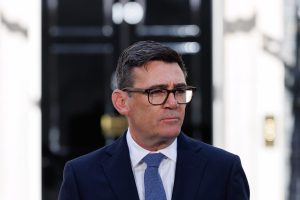
Burnham succeeded Sir Keir Starmer and set out a ‘rewiring the state’ agenda, placing the transfer of power from Westminster and Whitehall to regional and local Government at the centre of his premiership.
Sources: House of Lords Library, The King’s Fund, NIESR, and contemporaneous news reporting, current as of September 2026. Items marked Proposed or Expected are not yet confirmed Government policy.
Speak to Brevia
Brevia is monitoring the Government’s devolution reforms and their implications closely. If your organisation needs an in-depth briefing on what these could mean for your sector, contact our team on 020 7091 1650 or contact@brevia.co.uk
BREVIA CONSULTING PROVIDES CLEAR, FOCUSED PUBLIC AFFAIRS AND PUBLIC RELATIONS SUPPORT TO BUSINESSES AND CHARITIES