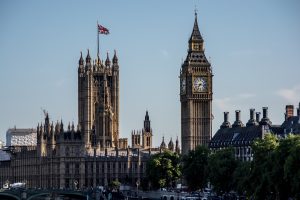

On 13 May 2026, the King’s Speech will set the UK Government’s legislative agenda for the next period of this Parliament. Following a lengthy, 22-month session that saw the passage of 30 of the 40 bills[1] announced in the 2024 King’s Speech the Government has reshaped employment and rental laws. As we move into the second session of this Parliament, the focus shifts to delivery ahead of the General Election expected in 2029.
For businesses and organisations, the upcoming King’s Speech will be defined by three legislative categories: the formalisation of carry-over Bills, the introduction of previously signalled politically salient reforms and a dash to achieve structural overhaul.
The carry-over agenda: unfinished business
Under Parliamentary Standing Orders, a Bill that has not completed its passage can be carried over to the next session, provided the Commons agrees to a specific motion. Seven public bills and one hybrid bill have already been secured for the 2026 – session:[2]
- The Railways Bill: Having completed its initial stages, this Bill remains the Government’s flagship transport reform. It will formally establish Great British Railways (GBR) as the single guiding mind for the network.
- Cyber Security and Resilience Bill: This legislation updates the 2018 NIS Regulations to protect critical supply chains. Its progression is a key watchpoint for the tech and energy sectors.
- Public Office (Accountability) Bill: Widely known as the ‘Hillsborough Law’, this Bill, which introduces a statutory duty of candour for public officials, was recently carried over to allow for further amendments regarding national security.
- High Speed Rail (Crewe – Manchester) Bill: As a hybrid bill, this continues its unique legislative journey, representing a multibillion-pound pipeline for the UK construction sector.
Expected new introductions:
Recent signalling from Ministers suggests around 30 bills with several new legislative pushes in the following areas:[3]
- Energy Security Bill: This is expected to be a flagship of the new session with a bill likely to introduce an ‘Anti-profiteering Framework’ and measures to streamline approvals for nuclear energy.[4]
- Audit Reform and Corporate Governance Bill: This is the session where the Financial Reporting Council (FRC) is finally expected to be replaced by the Audit, Reporting and Governance Authority (ARGA). The Bill will grant the new regulator statutory powers to investigate and sanction company directors, a significant change for corporate governance teams.
- Skills and Post-16 Education Bill: The government is under pressure to reform the Apprenticeship Levy. This Bill is expected to formalize the transition to a more flexible Growth and Skills Levy, a major priority for the business community.
- English Devolution & Local Standards: Following the 7 May elections, new legislation is anticipated to grant Mayors greater control over the power to implement Visitor Levies to fund regional growth with consultation feedback currently being analysed.[5]
- 10-Year Health Plan Bill: A structural overhaul of the NHS aimed at shifting care from ‘hospital to community’. This is expected to include the consolidation of several arm’s-length bodies and a new Digital Health Record mandate for all trusts.
Navigating the 2026/2027 Parliamentary Session
The 2026 King’s Speech arrives at a delicate moment for the Prime Minister, coming just days after what are expected to be challenging elections across England and in Scotland and Wales. The next session of Parliament will be critical for the Government as it attempts to project a narrative of economic competence and national resilience ahead of the 2029 General Election.
The cost of energy remains high on the political agenda and the Government will seek to address this with both retail and structural offerings. To counteract the rise of Reform UK, there is likely to be controversial legislation on tightening immigration rules, a reset with the EU and reforms on support for children with special educational needs and disabilities. As the more politically salient issues grab headlines, there will be much work for organisations to do in navigating the technical detail beneath the rhetoric.
BREVIA CONSULTING PROVIDES STRAIGHTFORWARD POLITICAL ADVICE AND SUPPORT TO BUSINESSES AND ORGANISATIONS
Discover how Brevia can help you and your organisation by contacting the Brevia Team on 020 7091 1650 or contact@brevia.co.uk
[1] Rebecca McKee, Institute for Government, 30 April 2026, link
[2] House of Commons Library, King’s Speech 2026, 29 April 2026, link
[3] Politico, Everything Keir Starmer has to get done before May, 13 April 2026, link
[4] HM Treasury and The Rt Hon Rachel Reeves MP, Chancellor sets out plan to crackdown on profiteering and drive Britain’s energy security, 24 March 2026, link
[5] Ministry of Housing, Communities and Local Government and HM Treasury, Visitor levy in England, 26 November 2026, link