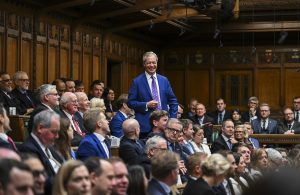

This month, Ministers from the Department for Energy Security and Net Zero (DESNZ) appeared in the House of Commons to answer Oral Questions from MPs.[1] Discussion coalesced around three principal themes: the outcome of Allocation Round 7 (AR7) of the Contracts for Difference Scheme, the publication of the Local Power Plan, and progress on expanding nuclear capacity.
Allocation Round 7 Results
MPs called into question the economic impacts of scaling up low-carbon generation to meet the Government’s Clean Power 2030 ambition. DESNZ Ministers maintained that renewable generation represents the most cost-effective pathway to energy security. Decarbonisation was framed as not only a climate imperative, but also an economic necessity. Minister for Energy Michael Shanks MP hailed AR7 as ‘the most successful renewables auction in history’, pointing to competitive strike prices as evidence of supply chain momentum. Nonetheless, Shadow ESNZ and Transport Minister Greg Smith MP challenged whether the scale of anticipated solar deployment could create adverse consequences for agricultural land use and food production – a common line of questioning faced by the Government.
Local Power Plan
Labour MPs pressed DESNZ Ministers on how communities would tangibly benefit from clean energy infrastructure. Minister Shanks positioned the Local Power Plan as a mechanism to embed communities in projects. This is to build on existing public sector rooftop solar rollouts and community energy schemes. He referenced the Government’s recent consultation on mandatory community benefits for larger-scale solar as a step towards greater community participation. He also stressed the importance of local ownership models in strengthening public support for the clean energy transition.
However, opposition MPs countered that many constituents perceive energy infrastructure as being imposed without adequate compensation or consultation. This, they said, is particularly true in rural areas. Acknowledging these concerns, Minister Shanks framed community benefits as integral to achieving deployment of clean energy technologies at scale. Minister for Climate Katie White OBE MP also suggested that constituency-level visibility, such as job opportunities, is essential for public buy-in.
Nuclear
The session also turned to nuclear policy. MPs probed DESNZ Ministers for updates on the deployment timeline for small modular reactors. Minister Shanks referenced the publication of the Advanced Nuclear Framework as evidence of strategic direction. This reaffirms the Government view of nuclear as essential for system stability and decarbonisation, complementing intermittent energy sources such as solar. Energy Secretary Ed Miliband MP highlighted the prospective employment and regional economic benefits associated with the Wylfa project on Anglesey. He contrasted this approach with the anti-nuclear stance of the Scottish Government. Shadow Minister Andrew Bowie MP echoed this sentiment in a rare show of agreement between the two.
Key Takeaways
This DESNZ Questions session reflected mounting parliamentary pressure to scale domestic energy capacity at pace and at reduced cost. Ministers leaned on key Government publications as signs of progress. However, these remain to be implemented fully in practice, leaving room for further scrutiny down the line. Getting the transition from planning to delivery right will prove crucial for Labour to maintain public confidence. This is especially notable ahead of local elections, as the Party contends with growing support for Reform. For industry, these DESNZ questions revealed how MPs are especially keen to see how energy projects are delivering positive impacts for their constituents on the ground.
Brevia Energy is a dedicated division of Brevia Consulting, and has a longstanding reputation for its expertise and experience in the Energy Sector.
To organise a discussion with Brevia Energy on how we can help you and your organisation, please get in touch via the link here. You can also contact the Brevia Energy Team on 020 7091 1650 or email contact@brevia.co.uk
[1] UK Parliament, Oral Answers to Questions: Energy Security and Net Zero, 10 February 2026, Link.