
The outgoing Prime Minister has confirmed that funding the Defence Investment Plan (DIP) will require capital projects in roads and energy to be scrapped. On top of the 1% reduction in capital budgets that all Departments must find to fund the DIP, DESNZ will be tasked with finding a further £2bn savings over four years.
For DESNZ this means a £100m capital budget reduction this calendar year, £600m in 2027/28, £700m in 2028/29, and £600m in 2029/30.
Nearly a quarter of these savings will be delivered by reducing the loans or equity investments the Department offers. These play a key role in making low-carbon technologies more attractive to households and giving communities a stake in the renewable transition. A proportion might be met through efficiencies, but this is likely to be limited due to the scale of cuts required.
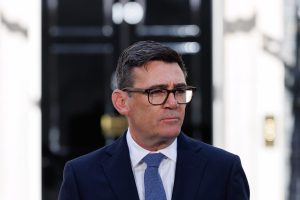
During his LBC interview Andy Burnham MP committed to fully funding the DIP. This article explores where these savings might come and potential impact on DESNZ commitments.
Carbon Capture, Usage and Storage (CCUS)
The Government allocated £9.4bn to CCUS in the 2025 Spending Review, to support four clusters, the East Coast Cluster, HyNet Hub, Acorn Project and Humberside’s Viking Project. The latter two have not yet reached Final Investment Decision.
CCS is no stranger to sudden removal of government support. Just over ten years ago the then Chancellor George Osborne abruptly scrapped a £1bn CCS competition, significantly stalling the sector’s progress. CCUS technology has not operated at commercial scale in the UK, partly due to policy uncertainty.
While the target to capture 20-30m tonnes of CO2 annually by 2030 has been abandoned the technology has a prominent role in how the Government is proposing to meet its carbon budgets and net zero commitments. The Climate Change Committee has forecast that the UK will need to capture up to 175 MtCO₂ to meet net zero by 2050.
If support for CCUS is removed now, the Government might risk further delays to its roll out at the scale required for its climate targets and jeopardise meeting its carbon reduction targets.
GB Energy
Labour’s manifesto committed to capitalising Great British Energy with £8.3bn over the course of this Parliament. The June 2025 Spending Review saw a significant proportion of this capital (£2.5bn) allocated to ‘Great British Energy – Nuclear’, a programme launched under the previous Conservative Government to support the development of the Small Modular Reactor (SMR) Programme.
To date, GB Energy has supported solar on the rooftops of 225 schools and 162 NHS sites in England. It launched the £1bn Energy Engineered in the UK programme, with £300m of funding for offshore wind supply chains. It made its first equity investment, investing £40m in ITM Power to support hydrogen electrolyser manufacturing in Sheffield.
The Treasury has previously explored cutting GB Energy’s budget, and its ambitions have changed since Labour entered Government. For example, as part of its Local Power Plan, Labour was initially targeting 8GW of small and medium-scale renewable energy projects to be supported via GB Energy, which was not included as part of its Strategy.
GBE Ventures, the proposed vehicle for GB Energy to take minority positions outside of the three priority areas has not yet had a budget allocated to it. It could therefore be at risk if cuts need to be made, and GB Energy decides to double down and focus on its three priority areas (GBE Local, onshore technologies, and offshore wind).
Warm Homes Plan
The Warm Homes Plan contains a mixture of grants and low-interest loans to encourage the uptake of heat pumps, solar panels, batteries and heat networks. It introduced a Warm Homes Fund, providing £5bn of capital grants to low-income and fuel poor households until 2030.
The low-income house grants have been allocated £960m in 2026/27, before increasing to £1bn annually from 2027 – 2030. The Boiler Upgrade Scheme (BUS) provides £7,500 in grants for all households with £400m allocated in 2026/27, increasing to £600m in 2027/28, £683m in 2028/29 and £708m in 2029/30.
The Warm Homes Plan would be a politically painful area for Labour to consider cutting. The Government forecasts that an average heat pump user can expect £200 of savings. Making these technologies more accessible to low-income and middle-income households is critical to ensure the benefits of the clean energy transition are felt at home.
Household and business energy bills
One of the reasons why UK energy bills remain high is the decision to fund a lot of energy policies through consumer bills. This includes funding to significantly increase electricity network capacity, delivering renewables via the Contracts for Difference mechanism, the Long Duration Energy Storage scheme, and new nuclear via a CfD for Hinkley Point C and Regulated Asset Base framework for Sizewell C.
Due to the way these are funded they may be safe from losing budget to the DIP, however, Burnham concluded his speech and pitch for leadership with:
“Imagine if we could bring down the cost of energy for people and business and the good things that would come from that. Imagine good growth in every postcode and hope in every heart. I’ll say it again – imagine – good growth in every postcode and hope in every heart. Well imagine no more. Let’s make it happen.”
The future of these schemes and types of support are at risk, due to the need to reduce bills and in addition The Times reports that Burnham’s transition team is considering moving green levies from energy bills to general taxation. This could bring renewed risk as support for the green measures competes with other priorities including the commitment to ramp up on defence to 3% in the next Parliament.
What this means for energy policy
The DESNZ Secretary of State Ed Miliband MP is a prime contender to be Burnham’s Chancellor. There is a misconception that he has been intransigent in his role. The Government changed its approach to the North Sea from banning new oil and gas exploration to allowing drilling that could be “tied back” to existing fields. Whilst in Opposition, Labour dropped plans to invest £28bn annually as part of its green investment plan. Even the CP2030 target moved from 100% clean power by 2030 to 95%. It is conceivable therefore that in the interest of national security these savings are found whether Miliband remains in DESNZ or moves to Number 11.
Plans on how the DIP will be funded are expected to be published in the Autumn. Businesses need to engage early, strategically and with clarity with the new Burnham Government to shape what the DIP cuts (and avoids) in the green transition.
Brevia Energy is a dedicated division of Brevia Consulting and has a longstanding reputation for its expertise and experience in the Energy Sector.
To organise a discussion with Brevia Energy on how we can help you and your organisation, please get in touch via the link here. You can also contact the Brevia Energy Team on 020 7091 1650 or email contact@brevia.co.uk .