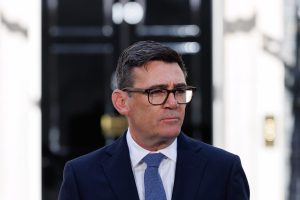

Andy Burnham MP used his first major speech since launching his leadership campaign to reinforce a governing philosophy centred on devolution, economic renewal and greater public control of essential services. The speech covered a broad range of policy areas, offering further insight into ‘Manchesterism’ and how a Burnham Government would approach the energy and utilities sector.
Burnham confirmed that devolution would sit at the heart of his leadership, announcing plans for a ‘No. 10 North’ to coordinate a long-term economic strategy across Whitehall and local government. He also pledged to give mayors greater powers and drawing on the example of Greater Manchester’s Bee Network, argued in favour of public control over essential services. For the energy sector, the speech reinforces several existing themes in Burnham’s thinking.
Continued support for the Clean Energy Superpower mission
The broad direction of energy policy is unlikely to shift significantly, despite speculation over Burnham’s comments on public ownership. Burnham has consistently supported the UK’s net zero agenda and, as Mayor of Greater Manchester, has gone further by committing the city region to reach net zero by 2038. In 2025, he stated that there was “no turning away from net zero”.[1]
His close relationship with current DESNZ Secretary of State Ed Miliband MP, as well as former Energy Consumer Minister Miatta Fahnbulleh MP, also points towards a degree of policy continuity. Even if Miliband were promoted to Chancellor, as has been speculated, the strategic direction of travel on decarbonisation and clean power is unlikely to change fundamentally.
Burnham has also committed to retaining Rachel Reeves’ fiscal rules. While this rules out borrowing for day-today spending, it still leaves the door open to borrowing for major capital investment projects. For the energy sector, this could signal support for government investment in strategic projects across energy infrastructure that are deemed nationally significant.
One area to watch, however, is oil and gas. Burnham has recently indicated that he remains open-minded about the future role of domestic oil and gas production, in particular the future of the North Sea. While this falls short of signalling a major policy shift, it suggests a greater willingness to balance climate objectives with economic and political considerations, particularly in areas where the transition remains contentious.
Greater public control does not necessarily mean nationalisation
Much attention has focused on Burnham’s calls for greater public control of essential services, leading some commentators to conclude that a Burnham Government would pursue widespread nationalisation. Monday’s speech presented a more nuanced approach.
Rather than advocating wholesale state ownership, Burnham’s emphasis is on giving the public sector greater strategic control over the delivery of essential services while allowing a mix of delivery models. His repeated reference to Greater Manchester’s Bee Network reflects this approach: public authorities set the strategic direction, standards and outcomes, while delivery involves private sector partners.
This distinction is important for utilities. The direction of travel appears to be towards a stronger role for the state in planning, coordinating and regulating infrastructure, rather than a wholesale transfer of assets into public ownership. That approach closely reflects the philosophy set out in The Productive State: A Framework for Manchesterism, published by the Burnham-aligned think tank Mainstream.[2] The paper welcomes the nationalisation of the National Energy System Operator (NESO), arguing that publicly owned corporations can provide long-term capital and deliver strategic investment, while stopping short of advocating blanket nationalisation.
Devolution will become increasingly important
Burnham’s commitment to devolution will be central to his premiership
His proposal to transfer more powers from Whitehall to local leaders suggests combined authorities are likely to play a much larger role in delivering energy policy. Areas such as retrofit, energy efficiency, local heat networks, fuel poverty programmes and community energy projects could all become increasingly place-based. Local Area Energy Plans could become more prominent as local authorities are given greater responsibility for coordinating investment and aligning infrastructure with housing, transport and economic development priorities.
For companies operating across the sector, this would further increase the importance of engaging now with metro mayors, combined authorities and local delivery partners. Being able to demonstrate projects that not only deliver community benefits, but have been developed with communities, is likely to become an increasingly important part of securing local support.
Managing the politics of the energy transition
Burnham’s emphasis on local leadership also reflects a broader political challenge facing the energy transition. DESNZ has already placed increasing emphasis on community ownership and ensuring local people have a greater say in energy infrastructure. As mentioned, Burnham appears likely to build on this approach, viewing stronger local engagement as a way of maintaining public support for net zero while ensuring the economic benefits of the transition are felt locally.
This will become increasingly important as Reform UK continues to challenge aspects of the net zero agenda and a growing number of Reform-led councils revisit local climate commitments. A more devolved model of delivery could help strengthen public support for infrastructure projects, but could also result in delivery tensions in Reform backed councils.
What to watch
Monday’s speech reinforces that devolution will likely be the defining feature of a Burnham Government. For the energy and utilities sector, the immediate implications are less about wholesale policy change and more about where decisions are made and who makes them.
Businesses should expect greater engagement with local and regional government, a stronger emphasis on place-based delivery, and continued debate over the balance between public oversight and private investment. While the fundamentals of net zero policy appear unlikely to shift dramatically, the governance and delivery of the transition, and the politics surrounding it, could take on a different approach under a Burnham administration.
Brevia Energy is a dedicated division of Brevia Consulting, a public relations and public affairs agency, and has a longstanding reputation for its expertise and experience in the Energy Sector. To organise a discussion with Brevia Energy on how we can help you and your organisation, please get in touch today. You can also contact the Brevia Energy Team on 020 7091 1650 or email contact@brevia.co.uk
Notes
[1] Business Green, Andy Burnham: ‘There must be no turning away from net zero’, 29 April 2025, Link
[2] Mainstream, Productive State: A Framework for Manchesterism, 21 June, 2026, Link