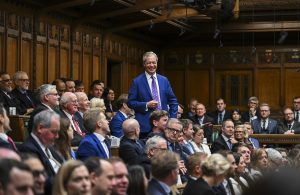

On Tuesday, Ministers from the Department for Energy Security and Net Zero (DESNZ) faced their first Oral Questions of 2026.[1] Among key issues, MPs scrutinised progress on energy affordability, the clean energy workforce transition and national grid reform. In this article, Brevia Energy reviews the themes that emerged in the Commons Chamber, and the direction set for the Government’s energy agenda in the year ahead.
Cost of Energy
Unsurprisingly, MPs focused on energy prices, underlining the impact of high and volatile bills on the cost of living and UK industrial competitiveness. For domestic bills, Ministers pointed to immediate relief measures, including the £150 reduction in household energy bills from April and the expansion of the Warm Homes Discount.
Alongside this, the Government referred to upcoming initiatives, including the forthcoming Warm Homes Plan. Ministers suggested the Plan would set out measures to accelerate energy efficiency and retrofit projects, such as heat pump deployment and low-carbon energy sources for heat networks, including for older, hard-to-treat homes. Energy Secretary Ed Miliband MP confirmed that the Plan would not introduce new energy levies, and would be accompanied by a new fuel poverty strategy for England, with a stronger focus on effective regulation, specialist installation, and long-term delivery.
On non-domestic energy bills, MPs raised pricing difficulties faced by SMEs, which do not benefit from an energy price cap, arguing these businesses remain exposed to energy market volatility. This remains a point of difficulty for the Labour Government, with Opposition Leader Kemi Badenoch MP pledging this week to bring down energy bills for pubs as a crucial element of the Conservative Party’s Cheap Power Plan.[2] Nonetheless, the Government is exploring how best to address non-domestic energy costs, with its consultation on the new British Industrial Competitiveness scheme drawing to a close on 19 January 2026, seeking to reduce electricity costs for industries within the Industrial Strategy’s growth sectors. The Government’s response to the ESNZ Committee’s Tackling the Cost of Energy Fifth Report, due by the end of the month, should also shed some light on the Government’s longer-term approach.[3]
Clean Energy Jobs and Workforce Transition
MPs highlighted both the scale of opportunity presented by renewable energy investment and the need for a fair transition for workers in existing industries such as oil and gas. Concerns were expressed about job losses and skills leakage if retraining and new employment opportunities are not delivered at pace. Minister Chris McDonald MP criticised the ‘climate-denying policies’ of the Right for obstructing secure employment opportunities in the long term and leaving local communities behind. Ministers reiterated the role of the Clean Energy Jobs Plan, the North Sea Transition Plan, and the Clean Industry Bonus in supporting high-quality jobs across the UK. These initiatives were framed as essential to ensuring that clean energy supply chains, skills development and retraining opportunities remain anchored domestically, supporting regional growth and long-term industrial resilience.
National Grid Reform
Grid connection delay, now a standard feature of energy debates in Parliament, was again discussed as a critical bottleneck to decarbonisation, local economic growth and community benefit. MPs cited long grid connection queues, constrained supply points, and misaligned prioritisation as barriers to investment, while Ministers reiterated that grid reform is central to delivering the Government’s Clean Power 2030 mission and reducing energy costs over the longer term.
The DESNZ Ministerial team pointed to recent progress on connections reform, including plans to strengthen the grid, deliver upgrades to existing infrastructure and confirmation of the Connections Reform Timeline, which prioritises projects aligned with national decarbonisation objectives.[4] MPs also noted the need for better support for community energy projects that face structural disadvantages in the connections process, and a fairer spatial distribution of developments. In this context, the Strategic Spatial Energy Plan, to be delivered in Autumn 2027, will be a key mechanism for translating these concerns into a more inclusive roadmap for the energy system.[5]
Looking Ahead
The first DESNZ Oral Questions of 2026 showed that energy costs remain front and centre in MPs’ minds. This is no surprise, especially heading into the January and February cold snaps. While DESNZ Ministers tried to emphasise recent action to deliver lower energy bills, there is a clear need for more to be done. Longer-term energy system issues, such as grid connections and the skills transition, continue to be raised. The coming months, particularly with the publication of the Warm Homes plan and Strategic Spatial Energy Plan, will be important in determining whether these policies translate into lower costs, stronger communities and a clean power energy system by 2030.
Brevia Energy is a dedicated division of Brevia Consulting, and has a longstanding reputation for its expertise and experience in the Energy Sector.
To organise a discussion with Brevia Energy on how we can help you and your organisation, please get in touch via the link here. You can also contact the Brevia Energy Team on 020 7091 1650 or email contact@brevia.co.uk
[1] UK Parliament, Oral Answers to Questions: Energy Security and Net Zero, 6 January 2026, Link.
[2] The Telegraph, Labour doesn’t understand that pubs hold this country together, 7 January 2026, Link.
[3] UK Parliament, Energy: Debts, 24 December 2025, Link.
[4] National Energy System Operator, Unveiling the Connections Reform timeline, 1 October 2025, Link.
[5] National Energy System Operator, NESO outlines new timelines for Strategic Energy Plans, 5 December 2025, Link.