
Polling stations open on 7 May, with local elections occurring in England and national election in Wales and Scotland. The Senedd election marks a change from previous elections for Wales, with new constituency boundaries, a new voting system and an increase in Senedd members, from 60 to 96.[1] There will be a significant influx of new MSs, while several senior politicians are at risk of losing their seat, including First Minister Eluned Morgan.[2]
As in the UK Parliament, energy is a key topic of debate in Wales, which is lagging behind England and Scotland in the renewables transition, and the rise of anti-net zero Reform UK draws into question the future of the industry in Wales.[3] In this article, Brevia Energy discusses the manifesto pledges of the key parties in the Welsh election, and considers the potential outcomes of 7 May upon the Senedd.
Energy Devolution
Energy policy is partially devolved and shared between the Welsh and UK Governments. The UK Government has reserved powers over sections over energy policy, such as responsibilities for strategic decisions and energy industry regulation.[4] The Welsh Government has responsibility for larger-scale energy generation and the promotion of energy efficiency.
Labour Party
For the first time since 1999, Labour will likely no longer be the largest party in the Senedd, with their vote share projected to fall to 16 per cent.[5] It is a far cry from the 39.9 per cent they gained in 2021.[6] It is unclear whether Labour would co-operate with Plaid in a coalition agreement, following a souring of relations.[7]
Labour’s manifesto focusses on building upon their work in Government, including the legally binding target for 100 per cent of electricity demand to be met by renewable sources by 2035 and achieving their 2030 target of 1GW of locally owned renewable generation in Wales ahead of schedule. Labour’s manifesto focuses on strengthening community benefit, and ease the process of switching to electric transport and heating.[8] Community benefits are a major feature in multiple manifestos, a response to growing concerns regarding the siting of renewable infrastructure and their impact upon their local areas.
Labour’s manifesto pledges to:
- Publish a renewable energy strategy
- Establish an energy department in the Welsh Government
- Advocate for the devolution of powers over the Crown Estate
- Create a Welsh Wealth Fund for Future Generations
- Achieve 1.5GW of community-owned renewable energy by 2035
- Mandate community benefits for renewable energy projects.
Plaid Cymru
Plaid Cymru is widely expected to lead the next Government in Wales. While possible that Plaid will tie with Reform as the two largest parties, Plaid is seen as more likely to establish a coalition, whether formal or informal, with Labour and the Green Party.[9] Plaid Cymru leader Rhun ap Iorweth has taken a softer approach to Welsh independence than previous party leaders, stating that they would not call for a referendum on the issue in their first term.[10]
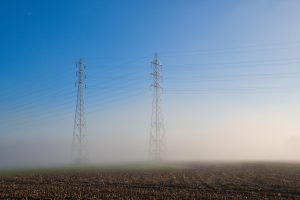
Plaid’s energy policy focuses on community benefit, planning to require a minimum community ownership stake in large energy projects, and ease the process of consumers installing their own energy infrastructure, such as wind turbines, solar energy and heat pumps. In keeping with their traditional voter base of the more rural west and north of Wales, they plan to prioritise the undergrounding of electricity cables and the banning of steel pylons.[11] They focus upon the need for energy developments to be dispersed across land, and note the need to protect agricultural land.
Plaid Cymru pledges to:
- Reform spatial planning
- Improve consenting timelines for renewable energy projects
- Develop a National Energy Strategy
- Devolve the Crown Estate
- Expand Trydan Gwyrdd Cymru
- Require a minimum community-ownership stake in energy infrastructure
- Prohibit large steel lattice pylons in favour of undergrounding.
Reform UK
Polling at 30 per cent, Reform could very likely become the largest party in the Senedd.[12] However, Reform is unlikely to form a Government due to a lack of compatibility with the other parties.
Reform’s energy policies include banning new major onshore energy generation, and they plan to publish an industrial strategy based on gas power.[13] Like Plaid, they support undergrounding energy infrastructure, reflecting both parties’ courting of rural votes.
Reform pledges to:
- Ban new onshore wind and solar farms
- Underground new power lines
- Abolish the 2030 and 2040 Net Zero targets
- Reduce funding for low-carbon industrial heat and heat networks
- Launch an industrial strategy, powered by gas
- Create a planning permission fast-track route for major industrial and infrastructure schemes.
Conservative Party
The Conservatives are expected to fall to the fifth-largest party. While their policies align most with Reform, a coalition is unlikely due to numerous high-profile defections to Reform.[14]
The Conservative Party pledges to:
- Introduce a moratorium on industrial-scale solar and wind farms
- Adopt a ‘bury cables first’ approach to infrastructure in the countryside
- Encourage solar energy on roof space and canopies on new commercial buildings and car parks.[15]
Green Party
The Green Party has never held a Senedd seat.[16] This year, party officials are predicting winning at least five seats in the newly enlarged Senedd.[17]
Green Party pledges include:
- Maintain 100 per cent renewable energy target by 2035
- Require rooftop solar on all new buildings
- Sensitive planning regarding energy infrastructure
- Develop a National Green Jobs Plan
- Devolution of the Crown Estate.
Conclusion
Wales faces a period of change in the coming months, with the end of Labour dominance in the Senedd, and a Senedd increasingly divided on Net Zero. The most likely outcome from the election is a Plaid Cymru-led coalition with other left-of-centre parties, and Reform UK as a significant minority voice. How this will function in practice remains to be seen, and energy stakeholders must be able to adapt their messaging across a broad base of political stakeholders in the face of a minority government. Whatever the outcome of the election, energy will remain high on the political agenda. It is key that interested companies engage with MSs in the early weeks following the election.
Brevia Energy is a dedicated division of Brevia Consulting, and has a longstanding reputation for its expertise and experience in the Energy Sector.
To organise a discussion with Brevia Energy on how we can help you and your organisation, please get in touch via the link here. You can also contact the Brevia Energy Team on 020 7091 1650 or email contact@brevia.co.uk
Bibliography
[1] Welsh Government, Senedd reform, 13 November 2024, Link
[2] BBC News, ‘Welsh first minister uses cocktail cans as props and admits she couldlose her seat in election’, 23 April 2026, Link
[3] Energy and Climate Intelligence Unit, Welsh electricity independence, 20 April 2026, Link
[4] Natural Resources Wales, Energy: our work in Wales, Link
[5] Nation.Cymru, ‘Plaid Cymru and Reform are neck-and-neck in Senedd election race – new poll’, 4 May 2026, Link
[6] BBC News, ‘Welsh election results 2021: Labour’s road to victory in numbers’, 8 May 2021, Link
[7] BBC News, ‘Labour and Plaid accuse each other of arrogance as election looms’, 24 March 2026, Link
[8] Welsh Labour, Welsh Labour Manifesto 2026, Link
[9] ITV News, ‘What happens if Reform becomes largest party in Senedd election, but falls short of a majority?’, 21 April 2026, Link
[10] BBC News, ‘Independence and fly-tipping: What Rhun ap Iorwerth told Radio Wales’ phone-in’, 25 February 2026, Link
[11] Plaid Cymru, 2026 Manifesto, Link
[12] ITV News,
‘Reform UK closes gap on Plaid Cymru in race to become Senedd’s largest party – ITV Cymru Wales poll’, 21 April 2026, Link
[13] Reform UK, Reform Wales Senedd Manifesto 2026, Link
[14] BBC News, ‘Welsh Tory leader’s staff defect to Reform on eve of conference’, 12 February 2026, Link
[15] Welsh Conservatives, Welsh Conservative Party Manifesto 2026, Link
[16] Electoral Reform Society, Time for Change: The 2022 Welsh Local Elections and the case for STV, 15 November 2022, Link
[17] BBC News, ‘Greens say they could be ‘kingmakers’ after Senedd election’ 31 March 2026, Link