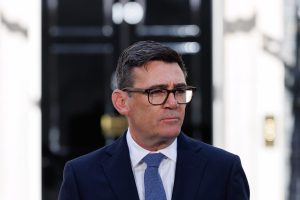

The appointment of Miatta Fahnbulleh MP as Secretary of State for Energy Security and Net Zero was one of the most intriguing appointments made by the new Prime Minister Andy Burnham MP. Having previously served as Minister for Energy Consumers, Fahnbulleh returns to the Department she initially joined as a junior minister immediately in 2024, but this time at its helm.
Much has already been written about her ideological viewpoints, her previous role as Chief Executive of the New Economics Foundation, and whether she represents a more radical direction for Labour’s energy agenda.[1]
In this article, Brevia reviews Fahnbulleh’s expected direction, what her appointment signals for energy policy and the issues businesses should be watching over the coming months.
A continuation of the Miliband era?
Fahnbulleh is a long-standing ally of the former DESNZ Secretary of State Ed Miliband MP, and served as his advisor during his time as Leader of the Opposition, and within his DESNZ team between July 2024 – September 2025.
During her time at DESNZ, she established herself as one of the Department’s strongest communicators on consumer policy, with the Warm Homes Plan and the Government’s ambition to reduce household energy bills being key parts of her brief.
Her appointment has fuelled speculation that it formed part of the wider Cabinet negotiations surrounding Miliband’s move to the Foreign Office to ensure continuity at DESNZ.
In the lead up to Andy Burnham entering Number 10, Fahnbulleh also acted as a key policy adviser to him, meaning there is also likely to be alignment between DESNZ and No10. She is one of the very few MPs elected in 2024 to have been appointed directly to a full Cabinet position, underlining the Prime Minister’s confidence in her.
A greater role for the state
Fahnbulleh’s appointment also offers an early indication of how the Government’s vision for a more active state may be reflected in energy policy.
The Prine Minister has argued that government should play a greater role in essential services and strategic infrastructure, framing public ownership not as an ideological objective but as a pragmatic question of where greater public oversight can improve resilience, investment and value for consumers.[2]
Fahnbulleh’s own writing reflects a similar economic philosophy. During her time at the New Economics Foundation, she argued that markets alone cannot address long-term challenges such as climate change and regional inequality, and that government has a greater role to play in shaping markets and directing investment.
In her 2019 Foreign Affairs essay, The Neoliberal Collapse: Markets Are Not the Answer, she called for governments to take a more active role in economic renewal and argued that investment in decarbonisation should be viewed as both climate policy and industrial strategy.
While those views were expressed before entering Parliament and should not be read as a blueprint for the Department’s policy, they provide useful context for understanding her wider economic philosophy.
A strong emphasis on place-based delivery
As noted above, Fahnbulleh was part of the core group advising the Prime Minister ahead of his premiership, and there is clear alignment on key policy areas.
For example, Fahnbulleh has consistently argued that economic policy should be less centralised, with greater responsibility for investment and delivery sitting with local leaders, regions and communities. This aligns closely with the Government’s wider emphasis on devolution and place-based growth, which Brevia wrote about here.
Fahnbulleh has also framed the energy transition as an opportunity to deliver economic growth “in every postcode”, reinforcing the Government’s view that decarbonisation should not only be seen as part of the net zero agenda but, also as an industrial and regional growth strategy.
For the energy sector, this could mean an increasing role for mayors, combined authorities and local government in delivering infrastructure projects, planning reform and the net zero transition.
A more pragmatic picture
Much of the commentary surrounding Fahnbulleh has focused on comments made during her time as Chief Executive of the New Economics Foundation, and her previously calling for an accelerated net zero target by the mid-2030s, with some critics portraying her as an ideological “eco-zealot”. [3]
However, her ministerial record presents a more balanced picture. As Minister for Energy Consumers, her focus was firmly on affordability, consumer protection and improving the energy efficiency of homes. She played a leading role in developing the Warm Homes Plan and championed policies designed to reduce household energy bills alongside decarbonisation. Her early public statements as Secretary of State also reinforce this picture – speaking on the BBC’s Today Programme on Monday 3 August, she made clear that her overriding priority is to reduce energy bills.
Taken together, her record suggests a Secretary of State whose priorities will centre on affordability and consumer outcomes while also progressing the transition to net zero.
The oil and gas question
The change in Prime Minister has led for further speculation on the future of Rosebank and Jackdaw oil and gas fields.[4] The decision will likely to be one of Fahnbulleh’s earliest and most politically sensitive decisions.
Speaking to both Times Radio and the BBC’s Today programme following her appointment, Fahnbulleh reiterated Labour’s manifesto commitment not to issue new North Sea exploration licences. However, the possibility of supporting tiebacks was left open, suggesting a degree of pragmatism as the Government continues to balance energy security, economic growth and the transition to net zero.[5]
Her decision to visit Aberdeen during her first week as Secretary of State was therefore notable, signalling an early willingness to engage directly with the sector. However it is notable that the issue was not addressed as part of the Government’s initial package of energy announcements focused on reducing the cost of living.
The decisions taken on these projects will provide one of the first significant indications of Fahnbulleh’s approach as Secretary of State.
What to watch
The appointment of Miatta Fahnbulleh signals continuity rather than a significant change in the Government’s energy agenda. While her background and previous writing provide useful context for understanding her broader outlook, her ministerial record suggests a focus on delivering the Government’s existing priorities, particularly around affordability and consumer outcomes.
The Prime Minister’s decision to remove VAT from domestic electricity bills on his first day in office sent a clear signal that reducing energy bills will remain a central, if not the central, priority. Fahnbulleh’s early public comments suggest this will remain a key focus for DESNZ as she balances the need to deliver lower bills with progress towards Clean Power 2030 and a series of significant policy decision ahead, including the outcome of Allocation Round 8, ongoing energy market reform, and decisions on competition in transmission networks. Delivering this agenda will also take place against a challenging backdrop, with DESNZ having already undergone significant reductions in headcount and facing potential further budget cuts.
Brevia Energy is a dedicated division of Brevia Consulting, a public relations and public affairs agency, and has a longstanding reputation for its expertise and experience in the Energy Sector.
To organise a discussion with Brevia Energy on how we can help you and your organisation, please get in touch via the link here. You can also contact the Brevia Energy Team on 020 7091 1650 or email contact@brevia.co.uk
Notes
[1] The Times, Is Miatta Fahnbulleh more radical on net zero than Ed Miliband?, 21 July 2026, Link
[2] Mainstream, Productive State: A Framework for Manchesterism, 21 June 2026, Link
[3] The Times, Miatta Fahnbulleh dismissed ‘eco-zealot’ claim amid North sea fears, 21 July 2026, Link
[4] The Telegraph, Burnham plans to fast-track North Sea oil drilling, 18 July 2026, Link
[5] The Times, New energy secretary should allow more North Sea drilling, 22 July 2026, Link