
CORONAVIRUS IMPLICATIONS FOR TRANSPORT POLICY
Some of the most dramatic effects of the Covid-19 outbreak and the response measures it demands have been on modes of transport. Airlines have been grounded, discretionary domestic travel is discouraged and the use of public transport is advised against.[1] Instead, the Government has promoted cycling and walking as a form of safe, socially distanced travel. With the consequences of the virus expected to persist for a ‘long period of time’[2] transport policy is shifting to keep people moving.
£2 BILLION PACKAGE TO SUPPORT CYCLING AND WALKING
Earlier this month, the Secretary of State for Transport, Grant Shapps MP, announced plans to provide funding to local authorities in England for pop-up bike lanes, protected space for cycling, safer junctions, and cycle and bus only corridors.[3] The Government also fast-tracked statutory guidance under Section 18 of the Traffic Management Act 2004 to require councils to reallocate roadspace in favour of cyclists and pedestrians.[4]
ARE E-SCOOTERS LEGAL IN THE UK? TRIALS BROUGHT FORWARD AND EXTENDED
E-scooters are currently illegal on public roads and pavements in the UK but the virus has prompted the Government to expedite e-scooter trials from 2021 to next month. Furthermore, the e-scooter trials will be extended from pilots with four councils[5] and offered to all local authorities across the country. The Government has said that new laws could mean e-scooters are allowed to be used on UK roads ‘as early as June’.[6]
OPENINGS TO PUSH FOR MORE SUPPORT FOR GREEN TRANSPORT
The Government’s rapid adjustment should be welcomed by proponents of sustainable transport solutions but also contextualised. The £2 billion investment is not additional funding; it forms part of a £5 billion package originally announced in February 2020.[7] In addition, cars and vans are still the most dominate mode of travel and the Transport Secretary has acknowledged that they will ‘continue to remain vital for many’.[8]
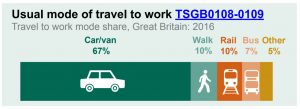
However, with alternative modes of transport offering reduced emissions, lower levels of air pollution and opinion polls showing widespread public support for greener forms of transport[10], there is a compelling message to take to policy-makers. Nine organisations, including Greenpeace UK, the Transport Action Network and Cycling UK have recently written to the Government to press the case for a ‘redesign’ of transport.[11] All organisations with an interest in this area should step forward and present the solutions they can bring to shape policy in their favour.
BREVIA CONSULTING PROVIDES STRAIGHTFORWARD POLITICAL ADVICE AND SUPPORT TO BUSINESSES AND ORGANISATIONS
Discover how Brevia can help you and your organisation by contacting the Brevia Transport Team on 020 7091 1650 or contact@brevia.co.uk
[1] The Rt Hon Boris Johnson MP, 10 May 2020, link
[2] The Guardian, 22 April 2020, link
[3] Department for Transport, 9 May 2020, link
[4] Department for Transport, 9 May 2020, link
[5] Department for Transport and Department for Business, Energy & Industrial Strategy, 16 March 2020, link
[6] Department for Transport, 9 May 2020, link
[7] Department for Transport, 10 Downing Street, 10 February 2020, link
[8] Department for Transport, 9 May 2020, link
[9] Department for Transport, Transport Statistics Great Britain 2017, November 2017, link